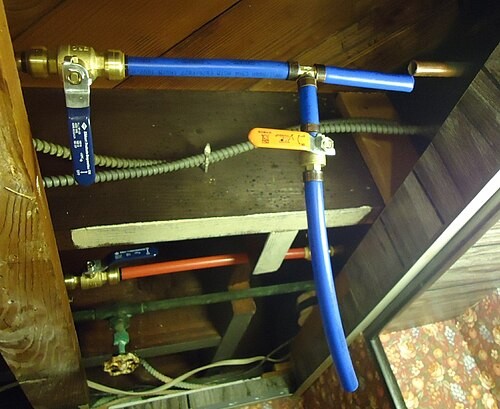
A single pipe leak is an easy call — patch it or replace the section, and move on. The harder decision is what to do once you’ve had two or three unrelated leaks in the same system over a year or two: at what point does patching stop making sense and a full repipe become the actual cost-effective choice?
The deciding factor is usually pipe material and age, more than the number of leaks itself. Galvanized steel supply lines corrode from the inside out — by the time one section develops a visible pinhole leak, the interior of the rest of the system has usually been narrowing with mineral buildup and rust for years, which is also why homes with old galvanized pipe often notice gradually worsening water pressure even before a leak shows up. A galvanized system over 40-50 years old that’s had one leak is statistically likely to have another soon, in a different spot, because the underlying corrosion is systemic, not local to the one failure point you can see.
Copper and PEX fail differently — usually from a specific cause (a nail through a wall, extreme water hardness, a bad original installation) rather than uniform age-related corrosion. A single leak in copper or PEX genuinely is more likely to be an isolated event worth just repairing, especially if the rest of the system is under 20 years old.
The other factor worth weighing: how much of the house you’d need to open up for a patch versus a repipe. If a leak is in an easily-accessible spot, patching is clearly cheaper. If accessing it means opening a finished ceiling or a wall behind tiled shower surround, you’re already paying much of the labor cost a full repipe would require — at that point, the material cost difference between patching one section and repiping the whole system is often smaller than homeowners expect, and buys you years of not having this same decision again.